
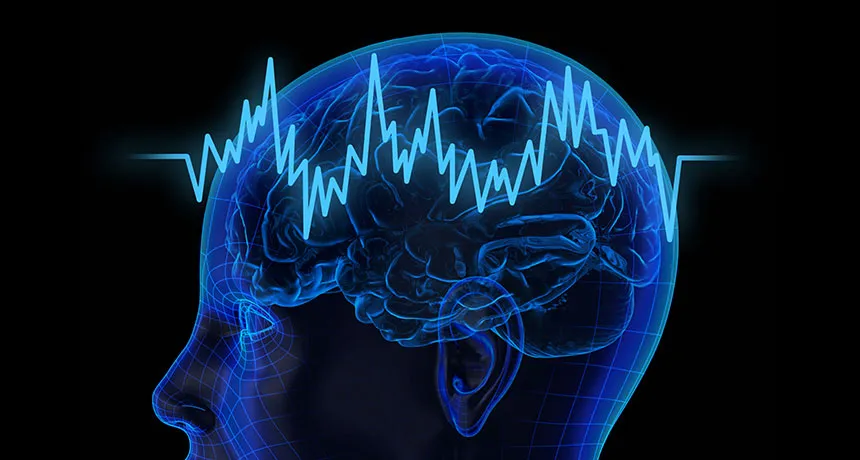
I recently read about a theory championed by the MIT Picower Institute for Learning and Memory called Spatial Computing Theory. It offers an explanation as to how the brain performs complex operations without rewiring itself constantly when details change, like shifting from following a recipe to opening a combination lock.
At its core, the theory argues that the brain doesn’t need to physically reconfigure its wiring every time we switch tasks, which surprised me, since I had pictured thinking as simply activating and deactivating different neural pathways.
The central idea is that different brain waves play different roles.
Beta waves act like the rules of the task. These slower waves function as a kind of guardrail system, creating temporary “patches” in the cortex. Only certain neurons are allowed to fire within each patch. In other words, beta waves set the structure, or what I think of as a stencil the brain can trace within.
Gamma waves, which are faster, carry the specific details. If beta waves are the rules, gamma waves are the content. They fill in the numbers and facts. For example, 350 degrees instead of 425. But they can only activate neurons inside the boundaries defined by the beta “stencil.”
This explains how the same neuron can be reused for different thoughts, a concept known as mixed selectivity. A neuron that represents “350” doesn’t permanently mean oven temperature. In a different wave-defined patch, it could just as easily represent a zip code or a price. The meaning depends on the spatial pattern created by the waves at that moment.
For decades, neuroscience has focused heavily on synaptic plasticity, the idea that learning and thinking come from strengthening or weakening physical connections between neurons. That process is real, but it’s slow. It works well for long-term learning, but not for the split-second flexibility needed to juggle instructions, remember a changing sequence, or recover from distraction.
Spatial Computing Theory suggests that rapid cognition comes from dynamic wave coordination instead. Brain waves can reorganize activity in milliseconds, allowing the same hardware to run different “programs” instantly.
Recent research builds on this framework. One finding describes rotating recovery waves. When you get distracted, traveling waves appear to sweep across the cortex and gently “herd” neural activity back onto the correct computational path.
Another discovery involves theta-frequency waves. These waves seem to sweep across the cortex like a radar scan, reading out information stored in visual working memory. This may explain why we sometimes miss small changes in our environment, because if the scan doesn’t align at the right moment, the detail slips past unnoticed.
All of this helps explain how we can switch tasks, recover from distractions, and handle constantly changing details, all without rebuilding our neural architecture each time.
If the theory continues to hold up, it may reshape how we understand attention, memory, and even disorders where these processes break down. More broadly, it suggests that the brain’s ability to be general and flexible, one of the defining features of human intelligence, may come not from stronger neurological pathways, but from smarter organization of how they’re used.